
By Anne-Marie Fowler, Managing Director, Priory Law
Modern Law Conveyancing Conference | Freight Island, Manchester | 10 June 2026
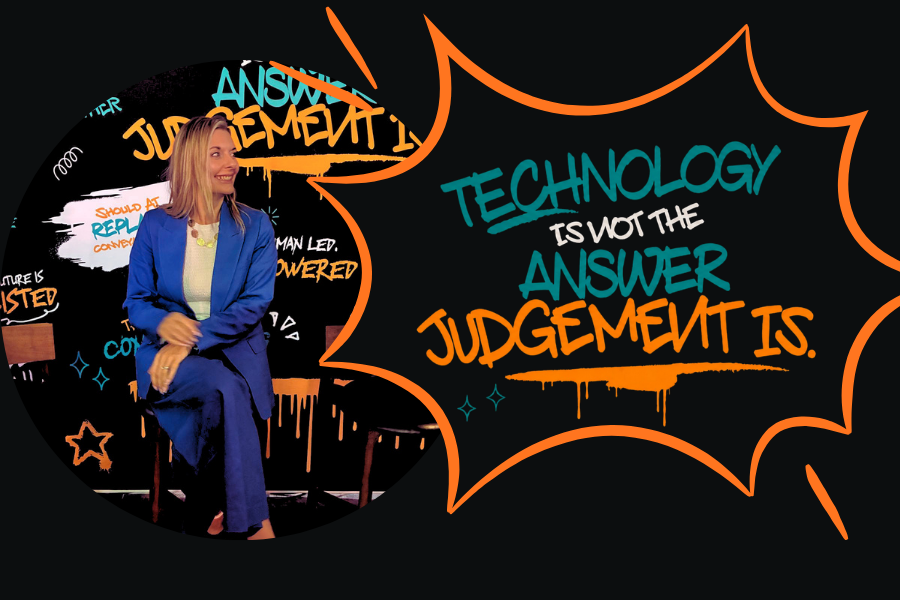
Earlier this month I was in Manchester at Freight Island, on a panel with some brilliant voices from across the sector, talking about AI. The panel title was "Technology is not the answer. Judgement is." It is a title I agree with. And I also think it is only half the story.
What I want to set down here is not a summary of the day. It is a reflection on what the conversation surfaced - about where this industry is, where it is heading, and what I think actually matters.
I am genuinely excited about AI. I want to say that clearly.
There is a tendency in professional services to approach AI from a position of caution. To lead with the risks, the caveats, the things that could go wrong. I understand that instinct. The stakes in conveyancing are not abstract. They are someone's home. Their finances. The chain that everything else depends on. My intention, and Priory Law's intention, has always been to use technology to do our jobs better. Not to do more jobs.
When I look at what AI has already done for our team - the administrative weight it has lifted, the earlier sight of issues it has given us, the time it has handed back - I feel something closer to optimism than anxiety. The question is not whether to use it. That question is settled. The question is what we choose to do with what it gives us.
The future of conveyancing won't be built by technology alone. It will be built by how we choose to use it.
What the room told me about where the sector is
Eight out of ten conveyancing firms now use AI to support their people. Double the proportion that did so in 2024. And yet the average time from instruction to completion rose to 123 days in 2025. An 18 per cent increase since 2019. We are spending more on technology and getting slower results.
The technology is not the problem. The problem is what firms are doing with it. Adding AI to a broken model does not fix the model. It makes the broken model faster. If the underlying issue is caseloads that are too high, supervision that is too thin, and communication that is reactive rather than proactive - technology layered on top of those problems does not solve them. It accelerates them.
The Conveyancing Task Force briefed Parliament in May this year. Twenty-three practising conveyancers, on the record. Their conclusion was clear: the problems in this sector are not technological. They are structural. Excessive caseloads. Inadequate supervision. Weak professional standards. The industry has responded by investing in tools. The Task Force is saying that misses the point entirely.
I think they are right. And nine days after I was on that panel, the government published its home buying and selling reform roadmap - making the same diagnosis from a different direction.
The train line that was not there
The day before the conference, an enquiry landed on our desk. Raised by an AI agent, as a standalone issue, stating that a train line was being built through the middle of the town. Based on a misinterpretation of a search entry. If that were true, we would have a very significant problem. It is not true. It was a search entry that, read in context by a qualified conveyancer, means something entirely different. It would not have warranted an enquiry at all. But it had not been checked. It went out as raised. That is not a failure of AI. That is a failure of supervision.
The analogy I kept coming back to on the panel is a talented junior team member. If you hand a junior a complex title report and ask them to prepare a first draft, you do not send it straight to the client. You review it. You check their reasoning. You sign it off. You use it as a teaching moment if something is not right. That is not distrust. That is good practice. That is how competence is built and how risk is managed.
AI sits in exactly that role right now. It can prepare, draft, organise, analyse and flag - brilliantly, and at a speed no human can match. But it requires a qualified professional to review and take ownership of the output. The moment that stops happening is the moment the problems start.
AI will read the surface. It cannot know the history underneath it, or the future the client is building towards. That is not a small thing. That is the whole thing.
What I am most excited about - and it is not the technology
The thing that seemed to resonate most with the room was not the risk question. It was what AI is doing for our people. Think about what a conveyancer's day used to look like. Chasing searches. Sending holding emails. Reformatting documents. Logging updates. Answering the same question for the fourteenth time that week. That is not why talented people came into this profession. They came because property transactions are genuinely interesting. Complex, human, layered with context and consequence.
When we started automating the repetitive, admin-heavy tasks, something unexpected happened. Our team started having better conversations. Not because they suddenly had more to say, but because they had more time to say it. Client communication stopped being something we fitted around the admin. It became the centrepiece of what we do.
The firms using technology well are the ones exposing their junior conveyancers to the richest, most complex aspects of transactions earlier in their careers. Not waiting until someone has spent three years doing admin before they get to think. AI accelerates that journey. A two-year qualified conveyancer can be sitting across from a client discussing the implications of a restrictive covenant, because the system has handled everything else.
That is a recruitment story, a retention story and a quality of work story.
"AI can automate chunks of a transaction. It cannot build a team that adapts to it. It cannot create the culture where innovation is welcomed rather than forced. Your people have never been more important."
Amy Blick, Chartered Fellow CIPD - strategic HR consultant partnering with law firms and legal tech businesses to deliver HR strategy that transforms commercial performance.
On building judgement when the tools increasingly do the thinking
This was the question I found most interesting on the panel. And the one where I felt most strongly that the answer matters. Judgement is built through experience, supervision and accountability. Through being allowed to get things slightly wrong in a safe environment, and understanding why. Through the question not being "what does the system say?" but "what do you think, and why?"
The danger is not that AI gets something wrong. The danger is that people stop asking why something is right. Junior conveyancers who move through their early years getting answers from tools, without ever forming their own view, will reach a point where the tool fails them and they have nothing to fall back on. We cannot let that happen.
At Priory Law we actively encourage our team to bring problems to AI before they bring them to us. But not to accept the first answer. We want them to come back with options, with analysis, with a view. "I looked at this three ways - here is what I think and here is why." That is a completely different professional from someone who rings their supervisor and says "I do not know what to do." And then - and this is the part I love most - when they find something interesting, something that surprised them, something that changed how they thought about a problem, we share it as a team. One person's discovery, shared, educates everyone.
The client instructed a conveyancer, not a platform and that is what I remind our team.
When everyone has the same tools, what is left to compete on?
My answer was simple: People. Judgement. Communication. Standards. Care.
The tools will become widely available, they already are, what will not be the same from firm to firm is what those firms choose to do with the time technology creates. Some will use it to take on more files. Others will use it to be better at the files they have. That is the choice this moment is asking every firm to make.
It is also worth noting that the rules around AI in conveyancing are still being written. The CLC has just been named as a key regulator in the government's new AI Growth Lab - the first regulatory sandbox of its kind for legal services. How AI is used in this sector is not just a practice management question. It is a regulatory one. The firms that will have influence over how that shakes out are the ones who are engaged, thoughtful, and building something they can stand behind.
What I came home thinking about
"Technology is not the answer. Judgement is." I agree with that. And I think it slightly underestimates what technology, used well, can do for the people who are doing the judging. Technology does not replace judgement. But it can create the conditions in which judgement is exercised better. With more time, more information, and more focus on the things that actually require a human being.
That is the version of AI adoption I am interested in. Not the version that moves faster. The version that is better. Every move is different. Every client matters. That has not changed. It will not change. And it is the thing I think we need to keep saying out loud, in rooms like the one I was in earlier this month, for as long as it needs saying.
We understand it's personal.
About Anne-Marie Fowler
Anne-Marie Fowler is Managing Director of Priory Law and a qualified Licensed Conveyancer. Her career spans estate agency, lettings, block management and residential conveyancing - a breadth that gives her a fuller picture of the property transaction than most conveyancers carry.
She qualified in 2015 while working full time and raising two children. Since then she has built Priory Law around a clear conviction: that conveyancing should be done differently. Managed caseloads. Proper supervision. Genuine transparency. A personal approach that takes seriously what moving home actually means to people.
Anne-Marie is a regular voice in industry conversations about AI, risk and professional standards in conveyancing.
About Priory Law
Priory Law is a specialist residential conveyancing firm acting for clients across England and Wales. Fixed fees, transparent pricing and a standard of communication we are genuinely proud of. Because every transaction is different, and every client matters. We understand it's personal.
© Priory Law 2026. This article is for informational purposes and does not constitute legal advice. For advice specific to your property transaction, please contact Priory Law directly.
Get in touch with Priory Law · Google Reviews · ReviewSolicitors